

An Uncomfortable Question: Assessing the Legitimacy of Vatican II as an Ecumenical Council
From the Wisdom of Father Hesse

Was Vatican II Even a Council?
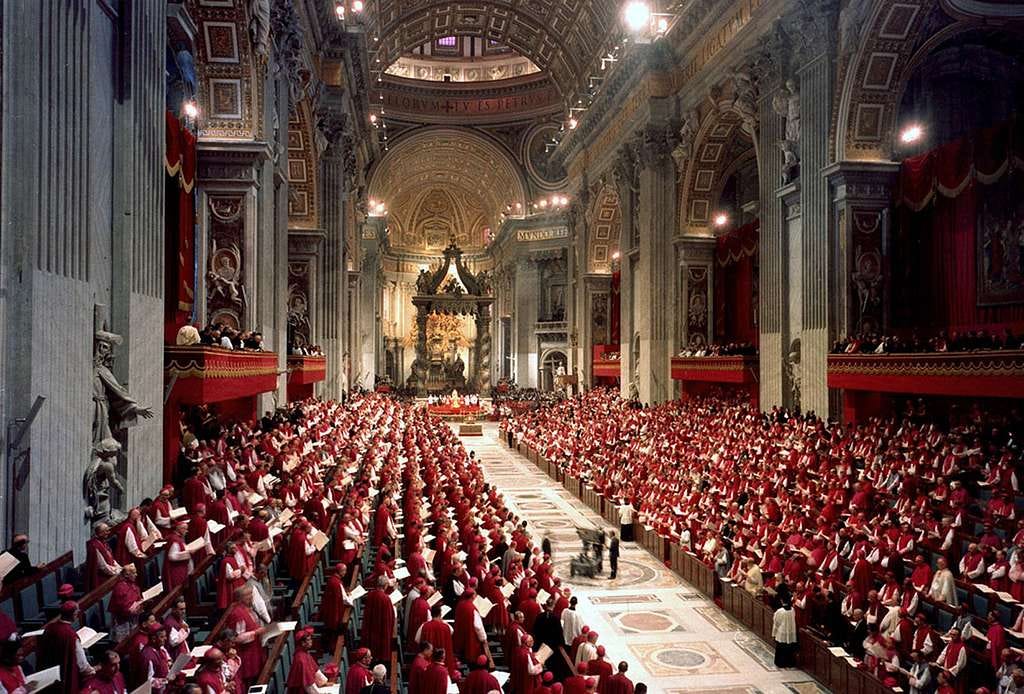
There is a question that most Catholics — even many traditionally-minded Catholics — have never quite thought to ask. They have argued about whether Vatican II was a good council or a bad one; whether its documents are orthodox or heterodox; whether its reforms were wise or catastrophic. But very few have stopped to ask the prior question: was it a council at all?
What follows is not my argument. It belongs to the late Father Gregory Hesse, an Austrian Dominican theologian who was, by any honest assessment, one of the most formidable Catholic theologians in recent memory. Fr. Hesse held a doctorate in canon law from the Pontifical University of Saint Thomas Aquinas in Rome and had served for years as personal secretary to Cardinal Stickler. Many of his lectures are online in audio and video format, and sometimes he can be dismissed as unserious by some, because he was a delightfully eclectic and eccentric man. He was, in the true sense of the word, a Renaissance man, in that his interests — and expertise — covered a wide range of topics, including everything from dogmatic theology to canon law, to G.K. Chesterton to Sommellerie. He was Austrian, but spoke perfect English, and would read English dictionaries for pleasure, and he could seemingly cite Denzinger manuals from memory down to the paragraph number, although he denied having a photographic memory.
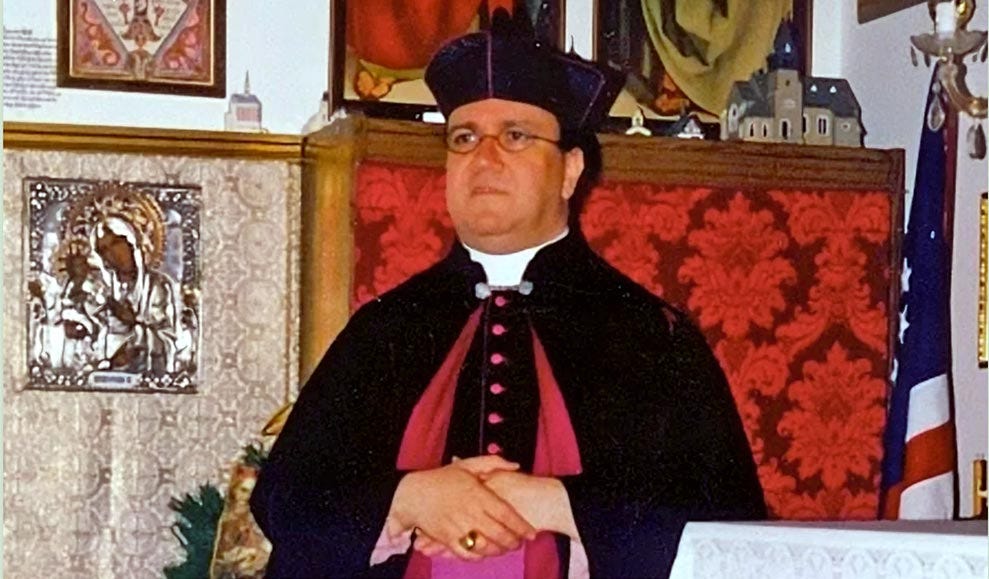
He was a trained canonist and theologian who followed an argument wherever it led, regardless of how uncomfortable the destination. And, many of his talks do make people uncomfortable, but that is because they sting with conviction and the truth.
Fr. Hesse was himself careful to note that this line of argument did not originate with him either. He first encountered it in the 1990s in the pages of Sì Sì No No — a rigorous Italian theological journal known in France as Courrier de Rome and in German as Anzeiger. It was there, he said, that he first understood the question was not whether Vatican II was a flawed or imperfect council. The question was whether it met the conditions for being a council at all.
I am presenting his argument here because I think it deserves a wider hearing; and because, the more I have examined it, the more I find it not only defensible but very difficult to refute. I have done my best to render it faithfully, adding only some additional documentation and commentary where it strengthens the case. Any errors in the presentation are mine; the argument is his. Also, I fully understand that what I say here could be rebutted, and I am not infallible — far from it! — but, since the “Conciliar Church” (a term coined by Roman officials and not by Archbishop Lefebvre, by the way) seems to have no problem with “separated brethren” who do not accept numerous Ecumenical Councils (or Councils at all) or the Papacy as such, then I would hope that the agitators who deplore my work could be “obedient” to the Spirit of Vatican II and the subsequent papacies, and afford me as much charity as they would be required to give actual schismatics and heretics.
The Framework
The framework Fr. Hesse applies is drawn from sacramental theology: matter, form, and intention — the same three categories by which the Church has always evaluated the validity of sacramental functions.
In the Church, intention is everything, and this surely applies to sacraments, which I believe none of us would doubt, but intention is required not merely for sacraments. For example, we have all likely been present for a blessing from the old Roman Ritual of an item, or Holy Water, etc. While it is true that a priest could give a general blessing to basically anything (even a block of ice, like Pope Leo, as silly as it looks), it is also true that there are different rituals for the blessings of different things. When a priest breaks out the Ritual, he says very specific prayers that are designed to invoke a particular blessing for whatever thing is being blessed. In addition, the prayers are extremely precise, which is a manifestation of following the command of Our Lord,
“Ask, and it shall be given you: seek, and you shall find: knock, and it shall be opened to you. For every one that asketh, receiveth: and he that seeketh, findeth: and to him that knocketh, it shall be opened,” (Matthew 7:7-8).
When Our Lord tells us to ask or to knock, we must understand that He means what He says. So, if we ask for a general blessing of “stuff” — “Heavenly Father, bless our stuff” — then we will get a general blessing, whatever that entails. However, if the priest prays very specific prayers over an item to either bless it or exorcise it for clear reasons, we will see a clear intention to ask for a concrete reality and not something else.
As an aside, I remember being present one time when a priest at my former Novus Ordo parish blessed water to make it Holy Water. I don’t remember what he said, but it was something like “Heavenly Father, bring your blessing down upon this water in the name of the Father, Son…etc”
He didn’t use a ritual, or follow any rubrics. Now, I don’t know if that means no holy water of sorts was made, but it very well could be the case that nothing substantial happened. Certainly, the water was not exorcised, because he didn’t pray anything to that effect, and there is no exorcism of water in the post-Vatican II ritual for sacramental prayers pertaining to water. In the Old Rite, the water is blessed and exorcised. We see here, that even something so seemingly simple as holy water is not the same thing, according to the intention of the prayers, in the New Rite as it is in the Old.
In addition, in the New Rite, no exorcized salt is added to the water, either.
This is but one example of many. But, we should ask ourselves, if it was always understood that holy water was made via prayers that included exorcisms, then does the New Rite even have holy water in the same way?
The intention is different, the form is different, and the matter is different (no salt added). So, again, is it even holy water in the New Rite?
Precision and intention are key; if we don’t ask for something, we won’t receive that thing, and if we ask for something in the most general sense, we will receive a general reply, so to speak.
And, of course, when it comes to sacraments and not just sacramentals, precision and intention are key for validity.
Now, a council is not a sacrament, but it is far more than a board meeting. And, as we will see, a Council is liturgical, and supremely so; therefore, ritual and specificity are paramount, as is the case in every proper liturgical setting. Ignoring this can lead to disastrous consequences.
